Home Physio Derbyshire provides private spinal surgery rehabilitation in Derby and across Derbyshire, delivered directly to your home. After a discectomy, spinal decompression, or spinal fusion, careful, well-timed physiotherapy is what rebuilds your strength and confidence to move safely again, and our physiotherapists deliver it at home in close step with your surgeon's protocol, with no GP referral needed.
Spinal surgery recovery calls for particular care, because the spine needs to be protected while it heals, yet the muscles that support it also need to be rebuilt after a period of pain and reduced activity. Getting that balance right, protecting the surgical site while gradually restoring strength and movement, is exactly what a well-structured rehabilitation programme does. Many people have limited their movement for months or years before surgery, so relearning to move confidently and rebuilding core and spinal strength is a central part of a good recovery.
The main goals of spinal surgery rehabilitation are:
Rehabilitation always works within your surgeon's guidance and any movement restrictions they have set, complementing your surgical care rather than replacing it. The approach and timings depend on the specific operation you had.
Home-based rehabilitation is particularly well suited to spinal surgery recovery, because in the early weeks sitting and travelling can be uncomfortable or restricted, and much of what you need to relearn, safe ways to move, sit, sleep, and manage stairs, is based at home. Bringing physiotherapy to you means this guidance is delivered exactly where you need it, at the point it matters most.
Our physiotherapists work directly from your surgeon's rehabilitation guidance and progress you only as it allows. Every assessment also includes structured screening, drawing on our physiotherapists' advanced clinical diagnostic training to monitor your recovery and flag any signs that need your surgical team's attention, so your rehabilitation stays both safe and effective.
Contact your surgical team or GP promptly, rather than waiting for your next physiotherapy visit, if you develop increasing redness, heat, or discharge around the wound, a fever, new or worsening weakness, numbness, or tingling in the legs, or any change in bladder or bowel control. These can indicate a serious problem after spinal surgery and need urgent medical attention.
After spinal surgery, recovery is about relearning the ordinary movements of daily life safely, getting in and out of bed, rising from a chair, managing stairs, sitting comfortably, and these all happen at home. During home visits your physiotherapist works on these real tasks in the spaces where you do them, teaching safe movement and posture, and giving practical advice on your bed, chair, and daily routine within any restrictions your surgeon has set. Delivering rehabilitation at home means the exercises and the everyday guidance fit together around your actual recovery.
Rehabilitation is delivered in line with your surgeon's guidance and your stage of healing. Early on it focuses on safe movement, posture, walking, and gentle activation of the muscles supporting the spine; as healing allows, it progresses to a graded programme rebuilding core and spinal strength and restoring confident, normal movement. Every session ends with a written exercise programme matched to your stage, because the exercises done correctly between visits are what carry your recovery forward safely.
Spinal surgery rehabilitation is part of our full post-surgical rehabilitation service in Derby, which supports recovery after a range of orthopaedic and joint surgeries at home.
Same-day appointments available. No GP referral needed.
Your visit is structured in three clear stages, with the time spent in each shaped by your condition and needs.
Your physiotherapist checks your movement, posture, walking, strength, and wound healing within your permitted limits, and reviews your progress against your surgeon's guidance and previous goals. Being at home means this includes how you are managing your actual bed, chair, and stairs, the real markers of getting your independence back.
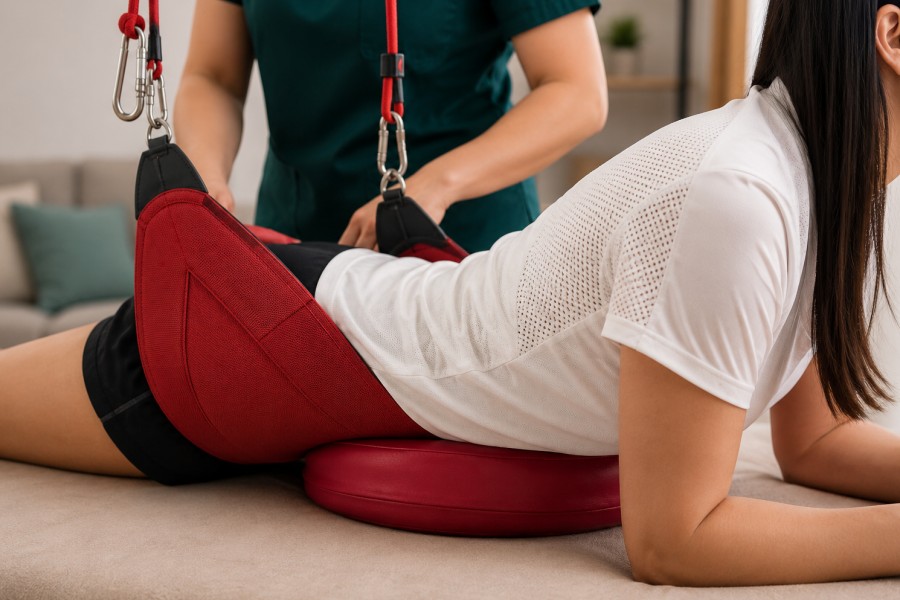
Treatment is delivered in the same visit, appropriate to your stage, from safe movement and posture retraining and gentle core activation early on, to progressive strengthening as healing allows. Each exercise is explained and kept strictly within the restrictions your surgeon has set, so you can carry it out safely and correctly on your own.
You finish with a clear picture of your progress, an updated written exercise programme matched to your stage, practical guidance on safe daily movement, sitting, and sleeping, and an honest view of the path ahead, progressed only as your surgeon's guidance and your healing allow.
Spinal surgery recovery varies more than most, because it depends heavily on the type of operation, and it is important to expect a gradual, staged process. As general guidance that always follows your surgeon's own timeline, recovery after a discectomy or decompression is often quicker, with many people returning to normal activities over several weeks to a few months. Spinal fusion typically takes longer, as the bone needs time to fuse, and rehabilitation is progressed carefully over many months. Across all of these, rebuilding strength and confident movement continues well beyond the initial healing.
Progress depends on the operation, your spine and fitness beforehand, and your general health. Your rehabilitation is paced entirely to your surgeon's guidance and your individual healing, rather than to a fixed schedule, because after spinal surgery, moving safely and at the right time matters far more than moving quickly.
Clear, direct answers about recovery, home rehabilitation, and booking.
This is set by your surgeon and depends on the operation you had. Some spinal rehabilitation begins with safe walking and gentle movement guidance in the early days, while more active strengthening starts later, once healing allows. We work directly from your surgeon's guidance, so we start and progress your rehabilitation exactly as it directs. You can arrange an assessment as soon as you are home and ready to begin.
Many people are given specific restrictions after spinal surgery, often around bending, lifting, and twisting, particularly in the early weeks, though the exact advice depends on your operation and surgeon. We always work within the restrictions your surgical team has given you, and a key part of home rehabilitation is teaching safe ways to carry out daily tasks within those limits, so you protect the healing spine while staying as active as you safely can.
Some pain and stiffness during recovery is normal as the spine heals and the muscles rebuild, and it usually eases as rehabilitation progresses. Nerve-related symptoms in particular can take time to settle. That said, new or worsening weakness, numbness, or any change in bladder or bowel control should always be reported to your surgical team promptly, as noted above, rather than waiting.
Yes. Every physiotherapist practising in the UK must be registered with the Health and Care Professions Council (HCPC), the statutory regulator for the profession, and our physiotherapists are Chartered Society of Physiotherapy members practising to its professional and ethical standards.
Home Physio Derbyshire delivers expert spinal surgery rehabilitation directly to your home, in close step with your surgeon's protocol. Same-day appointments available with no waiting lists.