Home Physio Derbyshire provides specialist post-surgical rehabilitation in Derby and across Derbyshire, delivered directly to your home. Whether you are recovering from a hip replacement, knee replacement, shoulder surgery, or spinal procedure, structured rehabilitation begins from the day of hospital discharge, without the physical strain of travelling to a clinic.
The weeks immediately after surgery decide how well recovery goes, and they should not be spent waiting.Following orthopaedic surgery, most patients receive limited physiotherapy input before discharge, with community follow-up often delayed by weeks due to referral waiting times. This gap between hospital discharge and consistent rehabilitation is a critical window, early, structured physiotherapy in these weeks produces significantly better functional outcomes, faster return to independence, and reduced risk of post-operative complications including joint stiffness, muscle atrophy, and scar tissue formation
Travelling to a physiotherapy clinic in the days and weeks after major orthopaedic surgery places unnecessary demands on a healing body. For hip and knee replacement patients, car journeys, clinic stairs, and waiting rooms are uncomfortable and clinically counterproductive. Home rehabilitation removes this entirely, allowing treatment to begin immediately after discharge, in the environment where recovery actually takes place, using your own stairs, chairs, and daily movement routes to guide every stage of the programme.Every rehabilitation programme is built around current clinical guidelines, the surgical precautions specific to your procedure, and your individual recovery goals. Sessions are coordinated with your surgical team where required, with clinical notes provided to your GP or consultant on request, so your rehabilitation runs as part of a joined-up recovery pathway rather than in isolation.
Home Physio Derbyshire provides structured, surgery-specific rehabilitation for the four most common orthopaedic procedures, each following a staged programme aligned with your surgical protocol.
Consistent physiotherapy in the first weeks after hip replacement is frequently delayed through community referral routes, yet this early period is precisely when structured rehabilitation matters most.
Home rehabilitation begins from day one of discharge, delivering progressive weight-bearing exercises, gait retraining, and hip precaution education, focused on restoring range of movement and rebuilding the strength safe walking depends on.
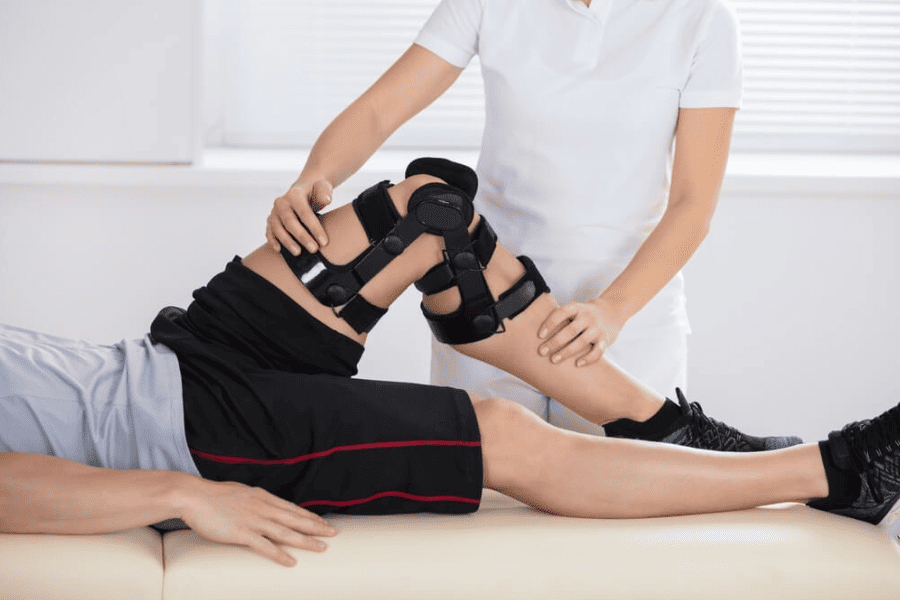
Knee replacement recovery depends on consistent, progressive rehabilitation beginning immediately after discharge to prevent stiffness, restore range of movement, and rebuild quadriceps strength.
Home treatment allows stair negotiation, transfers, and walking patterns to be assessed and trained in your actual home, making every session directly relevant to the daily demands your knee must meet.
Rehabilitation after rotator cuff repair, shoulder replacement, or stabilisation surgery requires a carefully staged, protocol-driven approach that respects healing timelines while progressively restoring movement.
Premature loading can compromise a surgical repair, so every stage follows your surgeon's protocol precisely, progressing strength and function only as healing allows and your consultant specifies.
Recovery after discectomy, decompression, or spinal fusion requires precise, progressive loading that protects the surgical site while rebuilding core stability and functional movement.
Programmes are tailored to the specific procedure performed and the precautions specified by your surgical team, restoring confident daily movement in carefully managed stages.
Every visit is structured around your surgical protocol and recovery stage, with the time spent in each stage shaped by where you are in your healing.
Your physiotherapist reviews your procedure, discharge instructions, wound healing status, pain levels, and the precautions specified by your consultant, with initial visits establishing a full baseline across range of movement, strength, weight-bearing status, and mobility.
Treatment combines hands-on joint mobilisation, swelling management, scar tissue work where clinically appropriate, and progressive strengthening matched to your healing stage, with progression carefully managed to respect surgical timelines and consultant-specified precautions throughout.
You finish each session with a written, stage-specific exercise programme and practical guidance covering safe daily tasks, sleep positioning, stair management, and gradual return to normal activity, updated at every visit as healing progresses.
By the end of every visit you will know exactly where your recovery stands against expected milestones, what this stage of rehabilitation is building towards, and precisely what to practise before the next session.
Same week appointments available from day of discharge. No GP referral is needed.
Home Physio Derbyshire provides transparent, fixed-fee rehabilitation with no hidden charges and no waiting lists. Every visit is aligned with your surgical protocol and current recovery stage.
Physiotherapy can begin on the day of discharge from hospital. Early mobilisation and progressive weight-bearing in the first days after surgery are clinically critical for preventing joint stiffness, muscle loss, and circulation complications. Appointments from day of discharge mean structured rehabilitation can begin immediately, without waiting for a community referral.
Yes. Home-based knee replacement rehabilitation is clinically effective and particularly valuable in the first weeks when travel is uncomfortable. A structured programme covering range of movement, quadriceps strengthening, gait retraining, and stair management produces outcomes equivalent to clinic rehabilitation, with the advantage of training in your actual environment.
It varies by procedure and starting fitness. As honest guidance, hip and knee replacement rehabilitation typically takes three to six months to full functional recovery, shoulder surgery ranges from three to twelve months depending on the procedure, and spinal surgery typically requires six to twelve weeks of progressive loading before returning to normal activity.
Yes. Post-operative swelling and oedema are normal responses to surgical trauma and can significantly limit range of motion and rehabilitation progress if left unmanaged. Physiotherapy addresses post-surgical oedema through elevation guidance, gentle active movement exercises to promote lymphatic drainage, and manual oedema management techniques where clinically indicated. Effective oedema management in the early post-surgical period significantly accelerates rehabilitation progress and reduces the risk of long term joint stiffness.
Yes. Post-operative swelling is a normal response to surgery but limits movement and slows rehabilitation if unmanaged. Treatment includes elevation guidance, gentle active exercises to support circulation, and hands-on techniques where clinically indicated, and effective swelling management in the early weeks noticeably supports overall progress.
Yes. Our physiotherapists are Chartered Physiotherapists registered with the Health and Care Professions Council (HCPC), with clinical experience in orthopaedic rehabilitation, and every programme follows your surgical team's protocol and current clinical guidelines.
Home Physio Derbyshire delivers specialist post-surgical rehabilitation directly to your home across Derby and Derbyshire, from the day of hospital discharge. Same day appointments available with no GP referral needed and no waiting lists.