Home Physio Derbyshire provides private hip replacement rehabilitation in Derby and across Derbyshire, delivered directly to your home. In the weeks after a total hip replacement, guided physiotherapy is what rebuilds your strength, movement, and confidence to move safely again, and our physiotherapists deliver it in the home where your recovery is happening, working alongside your surgical team, with no GP referral needed.
A hip replacement is one of the most successful operations in modern medicine, and most people do very well, but how well and how quickly you recover depends on the rehabilitation that follows. The surgery gives you a pain-free joint; physiotherapy rebuilds the muscle strength that wasted while the hip was painful, restores a normal walking pattern, and rebuilds the confidence to move without fear. Many people have been limping and avoiding activity for a long time before surgery, so relearning to move well is a genuine and important part of recovery.
The main goals of hip replacement rehabilitation are:
Rehabilitation always works within your surgeon's guidance and any movement precautions they have given, complementing your surgical care rather than replacing it.
Home-based rehabilitation suits hip replacement recovery especially well, because the early weeks are when travelling is most awkward and when many of the specific challenges, low chairs, the car, getting dressed, are firmly based at home. Bringing physiotherapy to you means the rehabilitation is built directly around the real tasks and spaces you are navigating, at the time it matters most.
Our physiotherapists work alongside your surgical team and follow any post-operative movement precautions you have been given. Every assessment also includes structured screening, drawing on our physiotherapists' advanced clinical diagnostic training to monitor your recovery and flag anything that needs your surgical team's attention, so your rehabilitation stays both progressive and safe.
Contact your surgical team or GP promptly, rather than waiting for your next physiotherapy visit, if you develop increasing redness, heat, or discharge around the wound, a fever, calf pain or swelling, sudden breathlessness, or if the leg suddenly becomes very painful, shortened, or you cannot move it. These can indicate infection, a blood clot, or a dislocation and need urgent medical attention.
Recovery after a hip replacement is measured in everyday movements, standing from a chair, getting in and out of bed and the car, managing your stairs, putting on shoes and socks, and these all happen at home. During home visits your physiotherapist works directly on these real tasks in the actual spaces where you do them, which is far more useful than practising on clinic equipment. It also allows practical advice on chair height, bed setup, and safe technique within any precautions your surgeon has set.
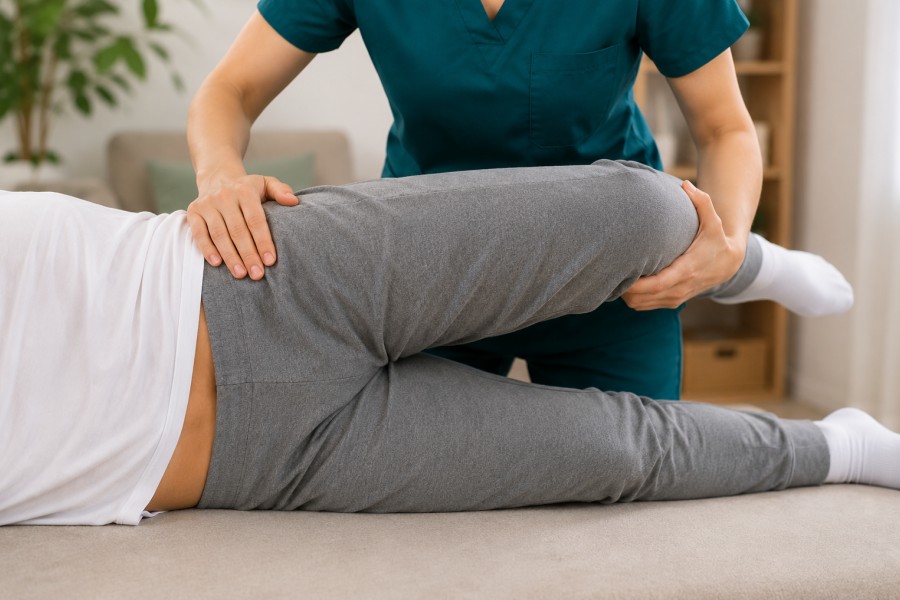
Rehabilitation is progressed in line with your surgical guidance and your individual recovery. It combines a graded strengthening programme for the hip and leg muscles, walking and gait retraining to restore an even, confident stride, hands-on techniques where helpful, and a safe, staged return to stairs, daily activities, and the movements that matter to you. Every session ends with a written exercise programme to continue between visits, because consistent exercise between sessions is what rebuilds strength and function.
Hip replacement rehabilitation is part of our full post-surgical rehabilitation service in Derby, which supports recovery after a range of orthopaedic and joint surgeries at home.
Same-day appointments available. No GP referral needed.
Your visit is structured in three clear stages, with the time spent in each shaped by your condition and needs.
Your physiotherapist checks your hip and leg strength, movement, walking pattern, and wound healing, and reviews your progress against your surgical guidance and previous goals. Being at home means this includes how you are managing your actual chair, bed, car, and stairs, the real markers of getting your independence back.
Treatment is delivered in the same visit, combining a progressed strengthening and mobility programme appropriate to your stage of recovery with gait retraining and hands-on work where it helps. Each exercise is explained and set to the right level, and kept within any precautions your surgeon has given, so you can carry it out safely on your own.
You finish with a clear picture of your progress, an updated written exercise programme to continue between visits, practical guidance on daily tasks, walking, and stairs, and an honest view of the path ahead, reviewed and progressed as your recovery advances.
Hip replacement recovery is often quicker in its early stages than people expect, though full recovery still takes time. As general guidance that always sits within your surgeon's own timeline, many people are walking more comfortably within a few weeks and managing most daily activities within around six weeks, with continued strengthening over the first three months. Strength and full confidence keep improving for up to a year. The early weeks of focused rehabilitation, rebuilding the muscle lost before surgery, set the foundation for how well you move afterwards.
Progress varies with the type of surgery, how mobile you were beforehand, and your general health. Your rehabilitation is paced to your individual recovery and always aligned with your surgeon's guidance and any precautions, rather than to a fixed schedule.
Clear, direct answers about recovery, home rehabilitation, and booking.
Home rehabilitation usually begins in the first days or weeks after you return home, working within any guidance and precautions your surgical team has given. Starting consistent rehabilitation early helps rebuild the muscle strength lost before surgery and restore a confident walking pattern sooner. You can arrange an assessment as soon as you are home and ready to begin.
Many people are given specific hip precautions after surgery, such as avoiding bending the hip too far, crossing the legs, or twisting, particularly in the early weeks, though the exact advice depends on your surgeon and the type of operation. We always work within the precautions your surgical team has given you, and part of home rehabilitation is helping you carry out daily tasks safely within those limits.
Most people are walking with an aid very soon after surgery and progress steadily from there. Restoring a smooth, even walking pattern without a limp takes longer, because it depends on rebuilding strength and confidence, and this is a core focus of rehabilitation. Gait retraining at home, on your own floors and stairs, is one of the most effective ways to get there.
Yes. Every physiotherapist practising in the UK must be registered with the Health and Care Professions Council (HCPC), the statutory regulator for the profession, and our physiotherapists are Chartered Society of Physiotherapy members practising to its professional and ethical standards.
Home Physio Derbyshire delivers expert hip replacement rehabilitation directly to your home, working alongside your surgical team. Same-day appointments available with no waiting lists.