Home Physio Derbyshire provides private post-fall rehabilitation in Derby and across Derbyshire, delivered directly to your home. After a fall, rebuilding strength and mobility matters, but so does rebuilding the confidence to move freely again, and our physiotherapists support both, delivered where you feel safest, with no GP referral needed.
A fall affects far more than any physical injury sustained, and it is honest to name that directly. Alongside any physical recovery needed, many people develop a real fear of falling again, which leads them to move more cautiously, do less, and sometimes avoid activities altogether. This is completely understandable, but it also quietly weakens the muscles and balance further, which paradoxically increases the actual risk of another fall, a cycle known as the post-fall syndrome. Rehabilitation addresses both sides deliberately, the physical recovery and the confidence, because treating only one leaves the job half done.
After a fall, rehabilitation commonly addresses:
Because the physical and psychological effects of a fall are closely linked, rehabilitation works on both together, at a pace that respects how significant the experience of falling can be.
It is worth arranging rehabilitation as soon as possible after a fall, once any injury has been medically assessed, because confidence and function are both easier to rebuild before they have had time to decline further. Whether the fall happened at home, in hospital, or elsewhere, and whatever the outcome, getting moving again safely and soon is one of the most protective things you can do. You do not need a GP referral, our physiotherapists assess and treat directly as first-contact clinicians, and can begin working with you at whatever stage you are at.
A thorough assessment also considers why the fall happened and whether anything needs medical follow-up. Every assessment includes structured screening, drawing on our physiotherapists' advanced clinical diagnostic training to identify anything suggesting an unaddressed medical cause, or any signs that need further investigation following the fall. If we find anything like this, we tell you honestly and coordinate the right referral.
Seek urgent medical attention rather than starting physiotherapy if, following a fall, you cannot bear weight, have severe pain or visible deformity, hit your head and have any drowsiness, confusion, or vomiting, or feel unwell in any way that concerns you. These need medical assessment first, particularly a head injury, which should always be checked promptly.
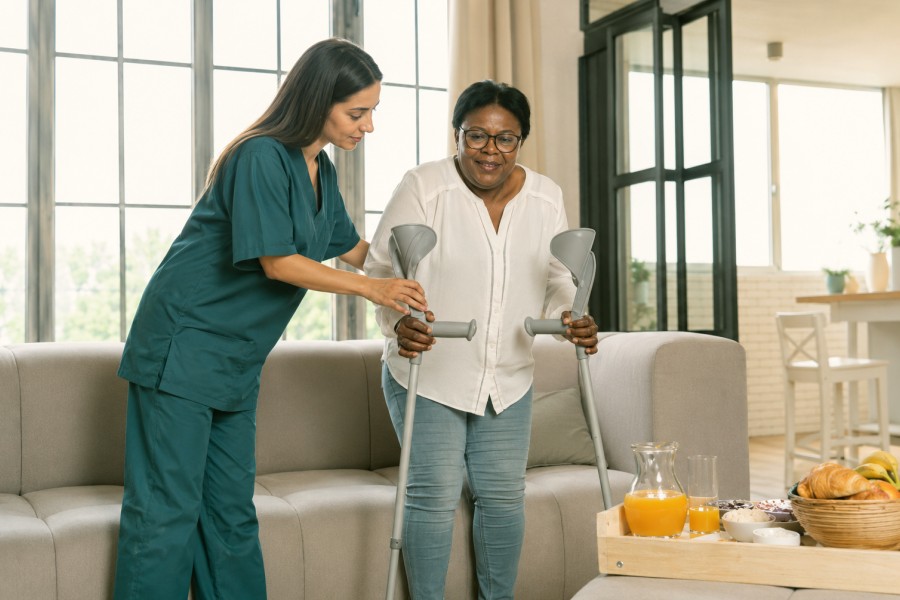
After a fall, home is where confidence is most naturally rebuilt, in the exact rooms, chairs, and stairs where daily life happens, and often the exact place the fall occurred. During home visits your physiotherapist works with you in this real environment, gently and progressively rebuilding your movement and confidence together, at a pace that respects how the fall has affected you. Being in familiar surroundings, rather than an unfamiliar clinic, genuinely helps people move more freely again, and it allows practical safety changes to be made exactly where they are needed.
Rehabilitation combines progressive strengthening and balance work, gentle graded exposure to the movements and situations that now feel worrying, practical home safety review, and honest, encouraging support to rebuild confidence step by step. Any physical injury is worked with alongside your medical care. Every session ends with a written home exercise programme, and family members are welcome to be involved, both in supporting the exercises and in understanding how to help without inadvertently reducing your independence further.
Post-fall rehabilitation is part of our full elderly physiotherapy service in Derby, which supports mobility, strength, and independence for older adults at home.
Same-day appointments available. No GP referral needed.
Your visit is structured in three clear stages, with the time spent in each shaped by your condition and needs.
Your physiotherapist assesses your strength, balance, walking, and any injury from the fall, and takes time to understand how the fall has affected your confidence, since this shapes the whole plan. Being at home means the real situations and, where relevant, the actual spot the fall happened, are part of understanding what you need.
Treatment begins in the same visit with strengthening and balance work set to a gentle, safe level, and gradual, supported practice of the movements that now feel worrying. Each step is explained clearly and taken at your pace, so confidence and capability are rebuilt together rather than one racing ahead of the other.
You finish with a clear understanding of what happened and how to move forward, a written exercise programme built around your home and pace, practical safety advice, and an honest, encouraging plan, reviewed and progressed as your strength and confidence grow.
Most people make a genuinely good recovery after a fall, both physically and in confidence, and it is honest and encouraging to say so. As general guidance, physical strength often improves noticeably within a few weeks of consistent rehabilitation, while confidence tends to rebuild a little more gradually, growing with each successful, supported step back into normal activity. Full recovery of both, feeling capable again and trusting your body again, often takes a few months, and that pace is normal rather than a sign of anything going wrong.
The most helpful approach is gradual, supported activity rather than either pushing too hard or withdrawing altogether. Each successful, safe experience of moving confidently rebuilds trust in your body, which is why a graded, encouraging programme matters as much as the physical exercises themselves.
Clear, direct answers for people recovering from a fall and their families about rehabilitation, confidence, and booking.
Completely normal, and very common after a fall. This fear is a recognised part of recovery, sometimes called post-fall syndrome, and it is not a sign of weakness. Left unaddressed it can lead to avoiding activity, which paradoxically weakens the body further and increases the real risk. Rehabilitation takes this seriously and works gently and gradually to rebuild both your physical ability and your trust in your own movement.
As soon as possible, once any injury has been medically assessed and it is safe to begin. Getting moving again early, even gently, helps prevent the deconditioning and loss of confidence that can build up quickly with inactivity after a fall. Whatever stage you are at, whether days or weeks after the fall, it is worth arranging an assessment rather than waiting.
Yes, this is a central part of post-fall rehabilitation, not an afterthought. Confidence and physical ability are closely linked after a fall, and addressing only one leaves the recovery incomplete. Treatment includes gentle, supported practice of the movements and situations that now feel worrying, at a pace that respects how significant the experience of falling can be, so confidence rebuilds alongside strength.
Yes. Every physiotherapist practising in the UK must be registered with the Health and Care Professions Council (HCPC), the statutory regulator for the profession, and our physiotherapists are Chartered Society of Physiotherapy members practising to its professional and ethical standards.
Home Physio Derbyshire delivers expert post-fall rehabilitation directly to your home, helping you rebuild strength, confidence, and independence at your own pace. Same-day appointments available with no waiting lists.