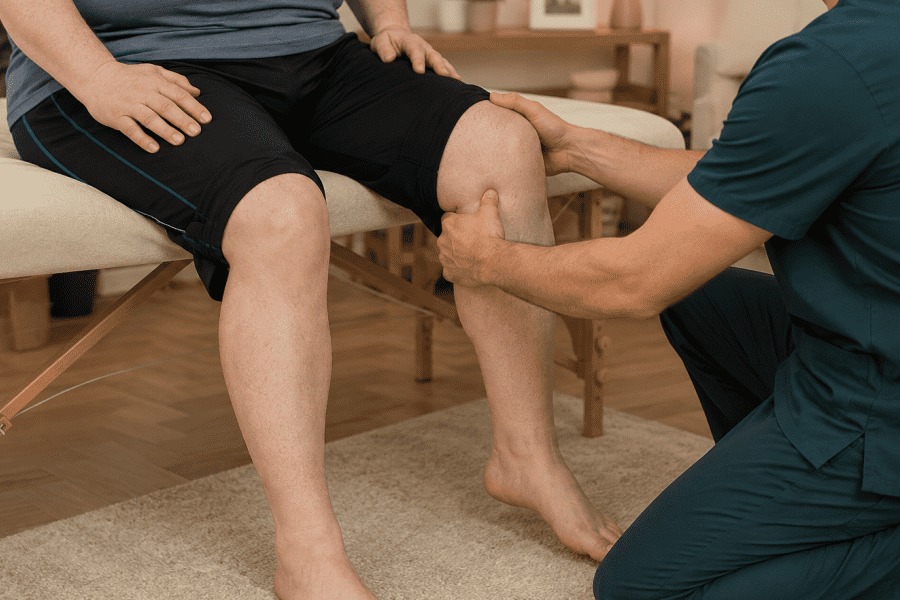
Home Physio Derbyshire provides private osteoarthritis physiotherapy in Derby and across Derbyshire, delivered directly to your home. Whether arthritis affects your hips, hands, or several joints at once, and is making everyday tasks and getting around harder, our physiotherapists build a practical plan to reduce pain and keep you moving, with no GP referral needed.
Osteoarthritis is the most common form of arthritis and a normal part of how joints change with age, where the smooth cartilage that cushions a joint gradually wears and the joint becomes stiff and painful. It commonly affects the hips, hands, knees, spine, and feet, and often more than one joint at once. Importantly, the level of wear seen on a scan does not reliably match the level of pain, which is why treatment focuses on improving how the joint works and feels rather than on the wear itself, and why staying active genuinely helps rather than harms an arthritic joint.
Osteoarthritis commonly affects:
Across all of these, the evidence is consistent and encouraging: exercise, movement, and staying active are the most effective treatments for osteoarthritis, ahead of rest, and they work at any age and any stage.
It is worth seeing a physiotherapist when arthritis is making daily activities harder, causing pain that limits what you do, or reducing your confidence to stay active and independent, you do not need to wait until it is severe. You also do not need to wait for a GP appointment or referral, our physiotherapists assess and treat osteoarthritis directly as first-contact clinicians. Starting early matters, because keeping joints moving and muscles strong slows the loss of function that otherwise creeps in as people do less to avoid pain.
Osteoarthritis is usually straightforward to identify, but some joint symptoms need to be distinguished from it. Every assessment includes structured screening, drawing on our physiotherapists' advanced clinical diagnostic training to tell osteoarthritis apart from inflammatory arthritis and other conditions that need different management. If your pattern of symptoms suggests something that needs medical review, such as inflammatory arthritis, we tell you honestly and coordinate the right referral.
Seek medical review rather than starting physiotherapy if several joints become hot, swollen, and stiff, particularly with prolonged morning stiffness lasting over an hour, or if you feel generally unwell with the joint symptoms. These can suggest an inflammatory arthritis that needs medical assessment and different treatment.
Osteoarthritis affects the ordinary movements of daily life, and those are exactly what a home visit can see, getting off your chair or bed, managing stairs, opening jars and taps with arthritic hands, moving around your kitchen. During a home visit your physiotherapist assesses how your affected joints cope with these real tasks and finds practical, specific ways to make them easier, which is far more useful than a clinic assessment removed from your daily environment. For hand arthritis in particular, seeing the actual tasks and objects you struggle with allows genuinely tailored advice.
Treatment is built around the strongest evidence for osteoarthritis: a personalised exercise and strengthening programme that supports the affected joints and maintains movement, paired with practical strategies to make daily life easier. Alongside the exercises, treatment includes hands-on techniques to ease stiffness and pain, guidance on pacing and managing flare-ups, advice on aids and adaptations where they help, and support to stay active with confidence. Every session ends with a written programme built around your joints, your home, and the tasks that matter to you.
Osteoarthritis treatment is part of our full musculoskeletal physiotherapy service in Derby, which covers the complete range of muscle, joint, and nerve conditions we treat at home.
Same-day appointments available. No GP referral needed.
Your visit is structured in three clear stages, with the time spent in each shaped by your condition and needs.
Your physiotherapist examines the movement, strength, and function of your affected joints, and watches how you manage the everyday tasks that arthritis makes harder, from standing up to using your hands. A history of which joints are involved and how they affect your day builds the full picture. Being at home means the real tasks and your own environment are part of the assessment.
Treatment begins in the same visit with hands-on techniques to ease stiffness and pain in the affected joints, and the first stage of a strengthening and movement programme tailored to which joints are involved. Each exercise is explained and set to a level you can manage comfortably, so you can carry it out between visits.
You finish with a clear explanation of your arthritis and what helps it, a personalised exercise programme built around your joints and your home, practical strategies for daily tasks and flare-ups, and an honest recommendation of how many sessions are likely to help, reviewed as you progress rather than fixed in advance.
Osteoarthritis is a long-term condition rather than something that resolves, so the goal is not to cure it but to reduce pain, improve function, and keep you active and independent, which physiotherapy does reliably. As honest guidance, most people notice meaningful improvements in pain and movement within around six to twelve weeks of a consistent exercise programme, with the benefits continuing to build and then being maintained by keeping the exercises going. Because arthritis is ongoing, the exercises become a long-term habit rather than a short course, and the improvements last as long as they are maintained.
The single most important message with osteoarthritis is that movement helps and rest harms. Joints and muscles that keep working stay stronger, more comfortable, and more functional, which is why a sustainable exercise routine you can keep up at home is the foundation of managing arthritis well.
Clear, direct answers about osteoarthritis treatment, staying active, and booking.
Exercise is good for osteoarthritis, and it is one of the most effective treatments there is. It is a common worry that using an arthritic joint will wear it out faster, but the evidence shows the opposite: appropriate exercise strengthens the muscles supporting the joint, reduces pain, and improves function. The key is the right type and amount, which an assessment sets, so you can stay active with confidence rather than avoiding movement.
Yes. Hand and thumb osteoarthritis responds well to specific exercises that maintain grip, movement, and strength, alongside practical advice on protecting the joints during daily tasks and using simple aids where they help. A home visit is especially useful for hand arthritis, because seeing the actual objects and tasks you find difficult allows genuinely tailored advice rather than general guidance.
For many people, yes, or at least delay it. Strengthening and exercise programmes reliably reduce pain and improve function in osteoarthritis, and are recommended as a first-line treatment before surgery is considered. Some joints do eventually need replacing, but starting physiotherapy early gives the best chance of managing well for as long as possible, and also improves recovery if surgery does become necessary later.
Yes. Every physiotherapist practising in the UK must be registered with the Health and Care Professions Council (HCPC), the statutory regulator for the profession, and our physiotherapists are Chartered Society of Physiotherapy members practising to its professional and ethical standards.
Home Physio Derbyshire delivers expert osteoarthritis physiotherapy directly to your home. Same-day appointments available with no waiting lists.