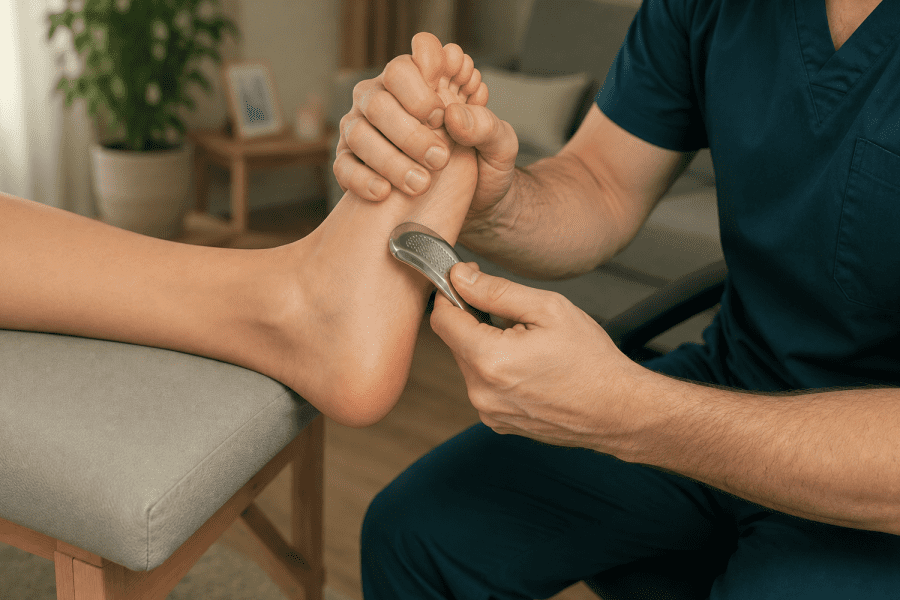
Home Physio Derbyshire provides private plantar fasciitis treatment in Derby and across Derbyshire, delivered directly to your home. If your first steps in the morning bring sharp heel pain, or your heel aches after standing and walking, our physiotherapists identify what is overloading the fascia and treat it around your daily routine, with no GP referral needed.
Plantar fasciitis is the most common cause of heel pain, and it comes from overload of the plantar fascia, the strong band of tissue running along the sole of the foot that supports the arch. The classic sign is sharp pain under the heel with the first steps in the morning or after sitting, which eases as you get moving and then returns after longer periods on your feet. It is an overload problem rather than an injury, which is why it responds to a specific loading and stretching approach rather than rest alone.
The most common causes and contributors of plantar fasciitis include:
Because the fascia is sensitive to how it is loaded, treatment focuses on managing that load and rebuilding the tissue's tolerance, alongside addressing the calf tightness that so often drives it.
As a general guide, heel pain that has lasted beyond two to three weeks, is worst with the first steps of the day, or is stopping you walking and standing comfortably warrants a physiotherapy assessment. You do not need to wait for a GP appointment or referral, our physiotherapists assess and treat plantar fasciitis directly as first-contact clinicians. Plantar fasciitis is well known for lingering for many months when left to settle on its own, so getting the right approach early genuinely shortens the course.
Most heel pain is plantar fasciitis, but a few other causes present similarly and need to be distinguished. Every assessment includes structured screening, drawing on our physiotherapists' advanced clinical diagnostic training to tell plantar fasciitis apart from a stress fracture, nerve entrapment, or a heel fat pad problem, each of which needs a different approach. If anything suggests your heel pain needs further investigation, we tell you honestly and coordinate the right referral.
Seek medical assessment rather than starting physiotherapy if your heel pain came on suddenly after a specific injury with significant swelling or bruising, if you cannot bear weight, or if there is numbness and tingling spreading into the foot. These point to something other than plantar fasciitis and need checking first.
Plantar fasciitis is closely tied to the surfaces you walk on and the footwear you use at home, the hard kitchen floor you stand on, the slippers or bare feet first thing in the morning, the shoes you wear for work. During a home visit your physiotherapist can see these everyday factors directly and give practical, specific advice, because small changes to footwear and floor surfaces often make a real difference to a condition that is so sensitive to load. Watching how you walk and load the foot in your own home also reveals the calf tightness and movement patterns feeding the problem.
Treatment combines the elements with the strongest evidence for plantar fasciitis: a progressive calf and foot loading programme to rebuild the fascia's tolerance, specific stretching for the calf and plantar fascia, hands-on soft tissue work to ease pain, and practical guidance on footwear, load management, and the simple morning routine that reduces those painful first steps. Every session ends with a written exercise programme built around your day, because consistency with the loading and stretching is what drives recovery.
Plantar fasciitis treatment is part of our full musculoskeletal physiotherapy service in Derby, which covers the complete range of muscle, joint, and nerve conditions we treat at home.
Same-day appointments available. No GP referral needed.
Your visit is structured in three clear stages, with the time spent in each shaped by your condition and needs.
Your physiotherapist confirms the diagnosis by testing the fascia and heel, checking your calf flexibility and foot mechanics, and taking a history of your activity, footwear, and how the pain behaves through the day. Being at home means your actual footwear and the floors you spend most time on can be reviewed directly, which matters for a condition so driven by load.
Treatment begins in the same visit with hands-on soft tissue work to ease the heel and calf, and the first stage of your loading and stretching programme, set to a level the fascia can tolerate. Each exercise is explained clearly, along with the reasoning, so you can carry it out correctly on your own.
You finish with a clear explanation of what is overloading the fascia, a progressive loading and stretching programme, practical footwear and morning-routine guidance, and an honest recommendation of how many sessions your recovery is likely to need, reviewed as you progress rather than fixed in advance.
Plantar fasciitis tests patience, because the fascia recovers slowly and the timeline is longer than most people hope. As honest guidance, many cases improve substantially over three to six months with a consistent loading and stretching programme and sensible load management, and milder cases can respond sooner. Long-standing plantar fasciitis can take longer still, but it does respond, the key is consistency rather than a quick fix. The encouraging point is that the loading approach has good evidence for genuine recovery, not just temporary relief.
The most common reason plantar fasciitis lingers is inconsistency, doing the exercises when it hurts and stopping when it eases, or returning to full activity too quickly. Steady, managed loading alongside the right footwear is what shortens the course, which is why the home programme and practical guidance matter as much as the treatment itself.
Clear, direct answers about plantar fasciitis treatment, recovery, and booking.
Morning heel pain is the classic sign of plantar fasciitis. Overnight the fascia tightens while you rest, so the first steps in the morning suddenly stretch and load it, which is sharply painful, then it eases as the tissue warms up and loosens with movement. A simple morning routine of gentle stretches before your first steps, which forms part of your programme, noticeably reduces this.
Supportive footwear with a cushioned heel and good arch support reduces the load on the fascia, and this matters at home too, where walking barefoot or in flat slippers on hard floors is a common aggravator. Rather than a single brand recommendation, your assessment gives practical guidance matched to your feet, your home surfaces, and your daily activity, since the right choice varies from person to person.
It sometimes settles eventually on its own, but often takes a year or more to do so, and can become long-standing and harder to treat if the load driving it is not addressed. A structured loading and stretching programme, alongside footwear and activity guidance, reliably shortens the course and reduces the chance of it becoming chronic, which is why early treatment is worthwhile.
Yes. Every physiotherapist practising in the UK must be registered with the Health and Care Professions Council (HCPC), the statutory regulator for the profession, and our physiotherapists are Chartered Society of Physiotherapy members practising to its professional and ethical standards.
Home Physio Derbyshire delivers expert plantar fasciitis treatment directly to your home. Same-day appointments available with no waiting lists.