Most people in the UK pay somewhere between £50 and £90 for a lymphatic drainage massage session. London is dearer, and specialist clinics can run well past that, with some therapists charging upwards of £250 a session.
But the per-session price is only half of what you need to know, because almost nobody has just one. So the number worth planning around is what a course costs, not what an hour costs.
That’s what this article is about. I’ve also covered the things people usually want to know before they book, including how many sessions you’re likely to need, what this treatment genuinely does, and the situations where you shouldn’t have it at all.
Here’s roughly where the market sits.
What you’re booking | Typical price |
|---|---|
Standard session, 60 minutes | £50 to £90 |
Shorter session, 30 minutes | £35 to £60 |
Longer or first session, 90 minutes | £80 to £120 |
Course package, around 5 sessions | £250 to £350 |
Specialist clinic or London | £100 to £280 |
If you’re looking at that spread and wondering how one treatment can cost £50 in one place and £280 in another, you’re asking exactly the right question. It’s not random. It’s because “lymphatic drainage massage” is being used to describe several fairly different things, delivered by people with very different levels of training.
I’ll come back to that further down, because it’s the part that actually helps you choose.
A couple of real examples to make the numbers concrete. A therapist working in Nottingham charges around £56 an hour, with a longer session the day after cosmetic surgery priced at £84 to account for the compression garment, and a five session package at £280. A specialist lymphoedema clinic in London starts at £60 for a half-hour appointment. At the top of the market, a well-known London therapist charges £280 for a single treatment.
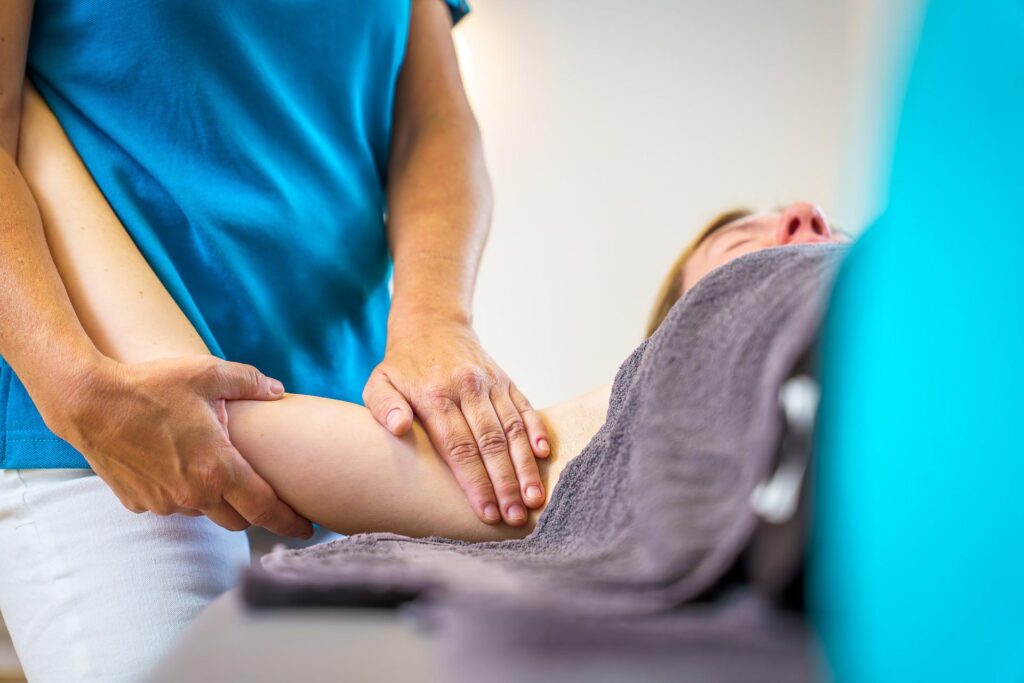
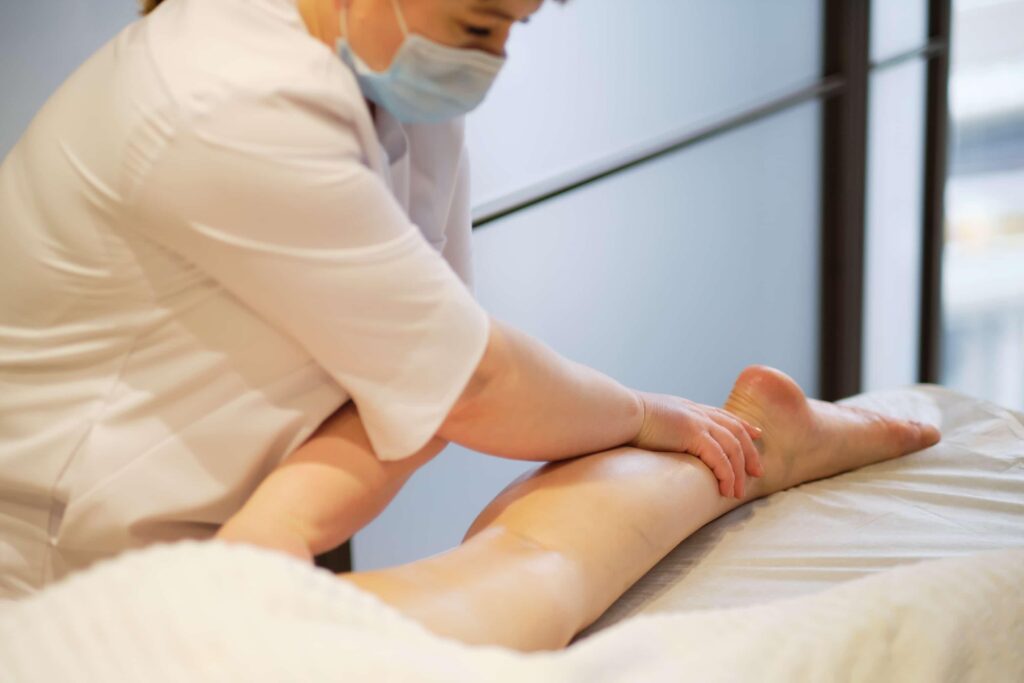
It’s a gentle, rhythmic technique that uses very light pressure to encourage lymph fluid towards lymph nodes that are working properly.
The light pressure catches people out. If you’ve booked expecting a deep tissue massage, you’ll spend the first ten minutes wondering whether anything is happening. That’s normal. The lymphatic vessels sit just under the skin, and pressing harder doesn’t help. It works against you.
There’s an important distinction to make here, and it explains most of the price spread above.
Manual lymphatic drainage, usually shortened to MLD, is a specific trained technique. Practitioners qualify through recognised methods such as Vodder, Leduc, Casley-Smith or Földi, and the training is substantial.
Lymphatic drainage massage as sold in a lot of spas and salons is a lighter-touch treatment inspired by the same idea, usually delivered by a beauty therapist who has done a short course.
Both can feel pleasant. They are not the same purchase, and if you’re dealing with lymphoedema or recovering from surgery, the difference matters a great deal.
I want to be straightforward about this, because there’s a lot of nonsense written about lymphatic drainage and you’ve probably read some of it already.
What it’s genuinely used for:
What it doesn’t do:
None of that makes the treatment worthless. Swelling management is a real clinical benefit and for the right person it makes a genuine difference to comfort and mobility. It just isn’t the wellness cure-all it gets sold as, and you should know that before you spend £280.
Three groups, really.
People recovering from surgery. This is probably the biggest single reason people book. After procedures like liposuction, tummy tucks or joint replacements, swelling is part of the recovery, and drainage work in the early weeks can make that period considerably more comfortable. Many surgeons recommend it directly.
People living with lymphoedema. Usually after cancer treatment or lymph node removal, where the drainage system itself has been damaged. Worth being clear here: MLD is normally one part of a wider management plan alongside compression garments and exercise, not a treatment on its own. Anyone offering it to you as a standalone fix for lymphoedema is overselling it.
People with persistent swelling after injury or a long period of immobility. Less common, but it comes up.
This gets skipped in almost everything written about pricing, and it shouldn’t be.
There are recognised situations where this treatment isn’t appropriate without medical clearance first. They include:
Please treat that as a list of things to check with your doctor rather than a list to assess yourself against. Some of them are not obvious from the outside, which is rather the point.
What I’d say practically is this. Any properly trained practitioner will ask you about all of this before they lay a hand on you. If someone takes your booking and your money without asking a single health question, that tells you something useful about where else to spend it.
This is the number that actually matters.
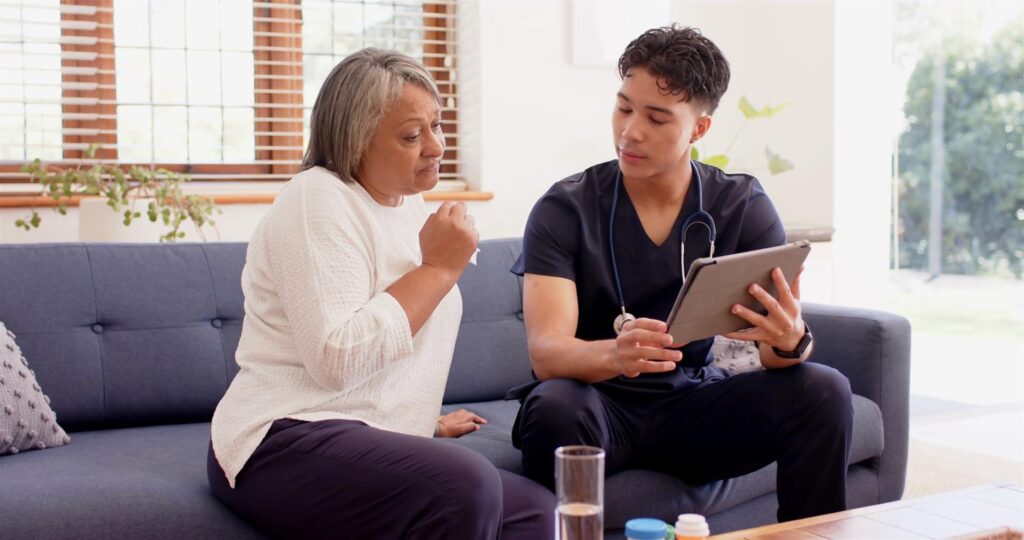
After surgery, most people have a short, fairly intensive course in the first few weeks, sometimes starting within days of the procedure. Packages of five or six sessions are common and usually work out cheaper per session than booking individually. Budget somewhere in the region of £250 to £500 for a typical post-surgical course.
For lymphoedema, it doesn’t really work as a course with an end date. There’s usually an intensive phase followed by ongoing maintenance, so it’s better thought of as a running cost than a one-off. That’s worth factoring in honestly before you start.
After an injury, it varies too much for a useful figure. Somewhere between two and six sessions covers most cases.
One thing I’d be wary of. If a practitioner tells you exactly how many sessions you’ll need before they’ve assessed you, they’re guessing. A sensible answer is an estimate after the first appointment, revised as things change.
If you’re weighing up the cost of ongoing treatment more generally, we’ve written a full breakdown of private physiotherapy costs in the UK that covers how to think about a whole course rather than a single session.
Six things, and they explain nearly all of that £50 to £280 spread.
Who’s treating you. A beauty therapist with a weekend course, a certified MLD practitioner, and a physiotherapist are three different levels of training. The prices reflect it.
Their certification. Recognised MLD qualifications like Vodder or Leduc take real time and money to obtain, and practitioners who hold them charge accordingly.
Session length. Thirty, sixty and ninety minute appointments are all sold under the same name. A £45 half-hour is not cheaper than a £70 hour. Compare by the hour.
Clinic or home visit. Home visits cost more because they include travel and time that isn’t shared with anyone else.
Where you are. London is substantially more expensive than everywhere else, and it isn’t close.
What’s included. Some prices cover assessment, compression advice and garment guidance. Some cover the hands-on hour and nothing else. Ask.
Whoever you end up going to, these are worth asking:
That first question is the one most people skip and the one that tells you the most.
Quick answers on lymphatic drainage massage costs, session numbers, insurance and what it can and cannot do.
Typically £50 to £90 per session across most of the country, with 30 minute appointments from around £35 and 90 minute sessions up to £120. London and specialist clinics charge more, sometimes considerably more. Package deals of five or six sessions usually work out cheaper per session.
After surgery, most people have five or six over a few weeks. For lymphoedema it's ongoing management rather than a fixed course. After an injury, two to six is common. You should get a proper estimate after your first assessment, not before it.
Sometimes, particularly where it's part of lymphoedema management following medical treatment. Cover for cosmetic post-surgical drainage is much less likely. Ring your insurer before booking and ask specifically, because policies differ a lot.
No. You might weigh a little less straight after a session because you've moved fluid around, but that's not fat loss and it returns. Anyone selling it to you as a weight loss treatment is not being straight with you.
That depends entirely on your surgeon and your procedure. Some recommend starting within a few days, others want you to wait. Ask your surgical team rather than your therapist, and don't book anything that contradicts their instructions.
Manual lymphatic drainage is a trained clinical technique with recognised certifications behind it. Lymphatic drainage massage is often used loosely for lighter spa treatments based on similar principles. For a genuine medical need, look specifically for MLD certification.
Still have a question? Speak to our physiotherapist directly.
Call +44 7368 156076The short answer is £50 to £90 for most people, most places. But if you take one thing from this, make it the question about training rather than the question about price.
For a bit of puffiness after a long flight, a spa treatment is fine and the cost is the only thing worth comparing. If you’re recovering from surgery or managing lymphoedema, you’re buying something quite different, and the cheapest hour on the list is not usually the one you want.
Ask what training they hold. Ask what’s included. And be sceptical of anyone promising to flush out your toxins.
If you’re in Derby or Derbyshire, Home Physio Derbyshire offers lymphatic drainage as part of our home visiting service, so treatment happens at your kitchen table rather than after a drive you might not feel up to. That matters more than people expect in the first weeks after surgery.
Our physiotherapists are registered with the Health and Care Professions Council, and every first appointment begins with a full assessment, including the screening questions set out above. If lymphatic drainage isn’t the right treatment for your situation, we’ll say so rather than book you in. Give us a ring for current session pricing and to talk through whether it suits your recovery.
We cover a thirty mile radius of Derby, including Belper, Ripley, Alfreton, Matlock, Chesterfield, Ilkeston and Mansfield, along with the surrounding areas of Derbyshire and Nottinghamshire. No referral is needed to book.
Book an assessment or call +44 7368 156076 if you’d rather ask a few questions first.