Home Physio Derbyshire provides private acquired brain injury rehabilitation in Derby and across Derbyshire, delivered directly to your home. Because the effects of a brain injury are different for everyone, our physiotherapists build a highly individualised programme around each person's specific difficulties and goals, delivered where daily life happens, working alongside the wider care team, with no GP referral needed.
An acquired brain injury is any damage to the brain that happens after birth, from a traumatic injury such as a fall or accident, or from causes such as a bleed, a lack of oxygen, or infection. Because the brain controls so much, and because every injury affects different areas, the physical effects vary enormously from person to person, which is why rehabilitation must be genuinely individualised. The encouraging basis for recovery is neuroplasticity, the brain's ability to form new connections and relearn through repeated, task-specific practice, which means meaningful improvement in movement and function is possible, often over a long period.
The physical effects of a brain injury can include:
Because the combination of effects is unique to each person, a thorough individual assessment is the essential first step, and the whole programme is built around it.
No two brain injuries are the same, so effective rehabilitation cannot follow a fixed routine, it has to be shaped entirely around the individual's specific difficulties, strengths, and goals. Recovery after a brain injury also often continues over a long period, and consistent, ongoing rehabilitation is what turns the brain's capacity to relearn into real, lasting gains in movement and independence. Structured input that adapts as the person progresses is central to making the most of that recovery potential.
Our physiotherapists work alongside the person's GP, consultant, and wider rehabilitation and care team, coordinating with any other therapies involved. Every assessment also includes structured screening, drawing on our physiotherapists' advanced clinical diagnostic training to monitor recovery and identify anything that needs to be flagged to the medical team, so rehabilitation stays safe and well-coordinated.
Contact the person's GP, consultant, or care team promptly, rather than waiting for the next physiotherapy visit, for any new or worsening symptoms such as increasing headaches, drowsiness, confusion, vomiting, seizures, or a sudden change in movement or alertness. These need medical review, and physiotherapy works alongside the medical team's management.
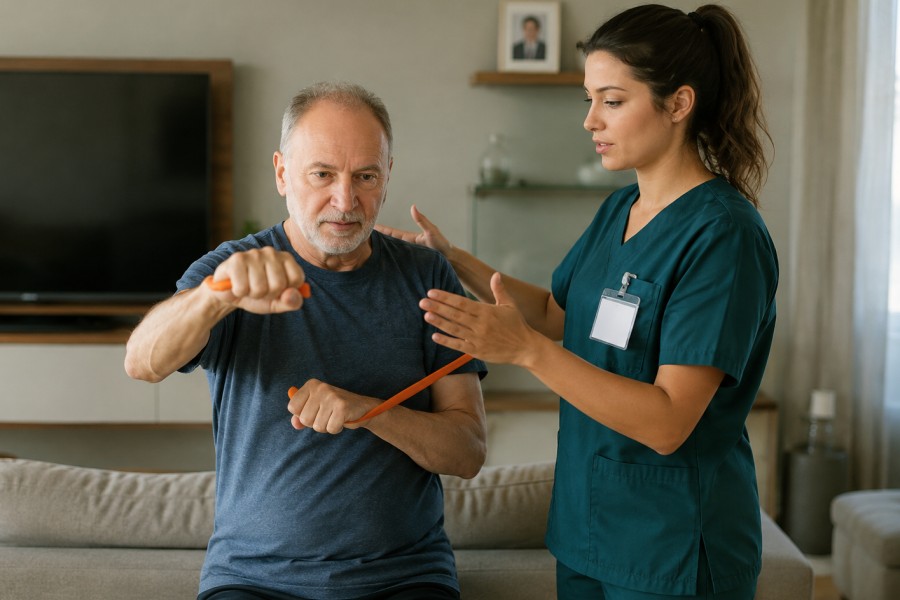
Rebuilding function after a brain injury is about relearning the real activities of daily life, and those happen at home, moving around familiar rooms, managing stairs, carrying out everyday tasks, so home is where rehabilitation is most meaningful. During home visits your physiotherapist works on the specific functional goals that matter to the person, practising them in the actual environment where they are used, which gives the brain the most relevant, repeatable practice, exactly what drives neuroplastic recovery. The home setting also lets rehabilitation adapt closely to the person's fatigue and tolerance.
Rehabilitation is built entirely around the individual and combines task-specific functional retraining, progressive strengthening, balance and mobility work, management of tone and spasticity where relevant, and fatigue management, all matched to the person's stage of recovery and goals. It is coordinated with the wider care team and progressed as recovery allows. Every session ends with a written home programme, because the repetition between visits is central to recovery, and family or carers can be closely involved in supporting it.
Brain injury rehabilitation is part of our full neurological rehabilitation service in Derby, which supports people with neurological conditions to maintain and rebuild movement, function, and independence at home.
Same-day appointments available. No GP referral needed.
Your visit is structured in three clear stages, with the time spent in each shaped by your condition and needs.
Your physiotherapist carries out a thorough assessment of movement, strength, balance, coordination, tone, and how the injury affects daily function, and sets meaningful, individual goals with the person and their family. Being at home means these goals are grounded in the real environment and the specific activities that matter most.
Treatment is delivered in the same visit, combining hands-on techniques with task-specific functional retraining, strengthening, and balance work, all matched to the person's tolerance and stage. Each activity is chosen for its relevance to the goals and explained clearly, so it can be repeated correctly between visits.
You finish with a clear picture of progress, a written home programme of functional exercises, guidance for family or carers on supporting rehabilitation safely, and an honest, individual view of the path ahead, reviewed and progressed as recovery continues.
Honesty is essential here: recovery after a brain injury is highly individual and varies enormously depending on the injury, so no two journeys are alike and outcomes cannot be predicted in advance. What is well established is that meaningful improvement in movement and function is possible, that recovery often continues over months and years rather than weeks, and that consistent, task-specific rehabilitation is one of the most important factors in making the most of it. We focus on each person's individual goals and steady, meaningful progress rather than a fixed prediction.
The most valuable factors are consistent, repeated practice of meaningful tasks and staying engaged in rehabilitation over the long term. Because recovery can continue for a long time and needs to adapt as the person progresses, ongoing, individualised, home-based rehabilitation is especially valuable, and close family involvement strengthens it further.
Clear, direct answers for people with a brain injury and their families about rehabilitation, home visits, and booking.
Yes. Recovery after a brain injury often continues over months and years, because the brain retains its ability to relearn movement through repeated, task-specific practice. Meaningful improvements are regularly made well beyond the early stages with consistent rehabilitation, so it is often not too late to work towards further gains in movement and independence, particularly when structured input has reduced but recovery potential remains.
Because every brain injury affects different areas of the brain, the physical effects differ enormously from person to person, so a fixed routine cannot work well. Effective rehabilitation is built entirely around the individual's specific difficulties, strengths, and goals, and adapts as they progress. This is exactly why a thorough individual assessment, and a programme shaped around real personal goals, matters so much.
Yes, and family involvement is often especially valuable after a brain injury. Family and carers can support the home programme and encourage the repeated, meaningful practice that drives recovery, and can help carry rehabilitation into everyday life. Part of home rehabilitation is guiding family members on how to help safely and effectively, so the support is sustainable and fits around daily routines.
Yes. Every physiotherapist practising in the UK must be registered with the Health and Care Professions Council (HCPC), the statutory regulator for the profession, and our physiotherapists are Chartered Society of Physiotherapy members practising to its professional and ethical standards.
Home Physio Derbyshire delivers expert acquired brain injury rehabilitation directly to your home, for people recovering from brain injury and the families supporting them. Same-day appointments available with no waiting lists.