For most everyday aches, strains and stiff backs, either one helps. Book whoever you can see soonest and you will probably do fine.
The choice starts to matter in specific situations, and this article names them properly rather than listing a few differences and leaving you to guess.
One thing worth admitting up front. Almost every page comparing these two professions gets written by one side or the other, which includes this one. So I have put the cases where an osteopath genuinely suits you better before the cases where a physiotherapist does.
A physiotherapist assesses you, works out what is driving the problem, treats it with their hands, and then hands you a programme to rebuild what has weakened.
That last part defines the job. Physiotherapy aims at function over several weeks, so a good chunk of the work happens between appointments rather than during them. You leave with exercises, they get harder as you improve, and the sessions usually space out as you need them less.
The scope stretches wider than most people assume. Physiotherapists rehabilitate people after surgery, after a stroke, and through conditions like Parkinson’s and multiple sclerosis. They rebuild balance and confidence in older adults who have had a fall. Aches and strains make up only part of the caseload.
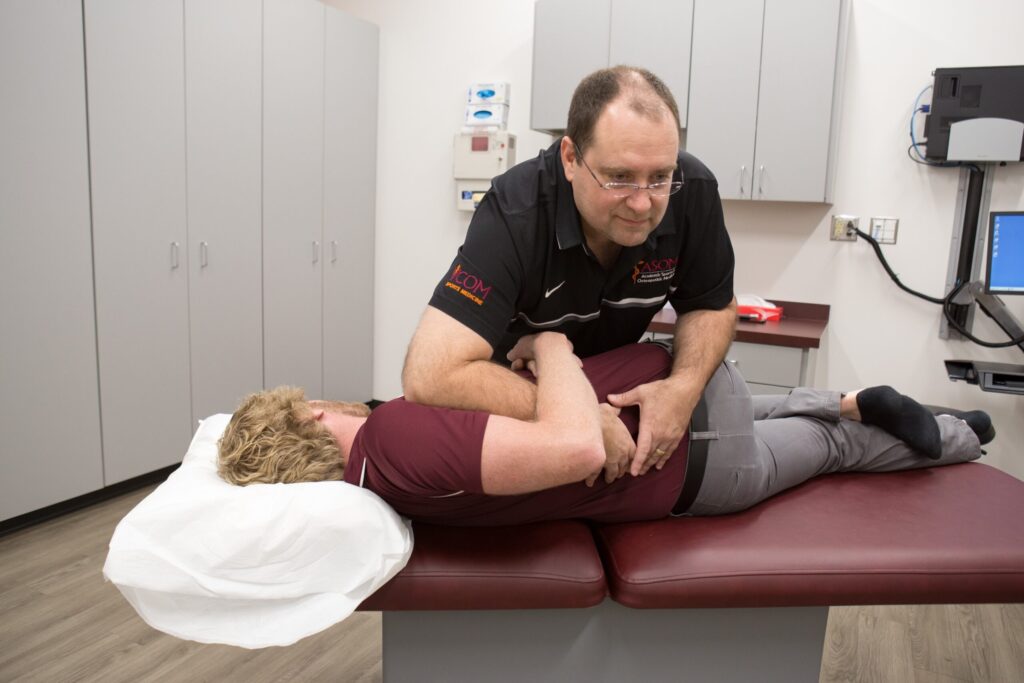
An osteopath trains longer, and that training leans heavily toward manual technique.
Osteopaths assess the whole body rather than zeroing in on the sore bit, on the view that the painful area often reflects something happening elsewhere. Treatment runs hands-on: manipulation, stretching, soft tissue work and joint mobilisation. You generally spend more of the appointment being treated, and courses often involve more frequent visits.
Plenty of people love this approach, and for good reason. If hands-on treatment is what you want and what helps you, an osteopath delivers more of it.
Stripped of the marketing, it comes down to this.
Physiotherapist | Osteopath | |
|---|---|---|
Main approach | Treat, then rebuild with exercise | Hands-on manual treatment |
A typical session | Treatment plus exercises to take away | More time spent hands-on |
Shape of a course | Fewer visits, more work between them | Often more frequent visits |
Scope | Musculoskeletal, neurological, post-surgical, mobility | Primarily musculoskeletal |
Regulation | Protected title with a statutory regulator | Protected title with a statutory regulator |
Referral needed | No | No |
Both titles enjoy legal protection in the UK, and both professions answer to their own statutory regulator, so you can check any practitioner on a public register before you book. Do that whichever you choose, particularly if you found them through an advert rather than a recommendation.

Four situations where I would point you toward an osteopath.
Your back or neck has seized up and you want relief now. Acute mechanical pain often responds beautifully to skilled hands-on work. If getting comfortable matters more than a twelve week plan, an osteopath fits.
Exercise-based rehabilitation has not worked for you before. Some people simply do not get on with exercise programmes. Pretending otherwise wastes everybody’s time. If that describes you, pick the approach you will actually turn up for.
You want frequent hands-on treatment. Physiotherapy deliberately spaces appointments out and pushes work onto you. If you would rather be treated more often, osteopathy suits that preference better.
You want somebody to look at the whole picture. If your knee started hurting after you hurt your hip, and you want one person examining how it all connects, a whole-body assessment makes sense.
None of those are consolation prizes. They are good reasons, and in those cases an osteopath is the right call.
Now the other side, and the list looks quite different.
You are recovering from surgery. Rehabilitation after a joint replacement or spinal surgery follows your surgeon’s protocol, with weight-bearing limits and timescales that govern everything you do. Physiotherapists work inside that framework routinely.
You have a neurological condition. Stroke recovery, Parkinson’s, multiple sclerosis and brain injury all need rehabilitation built around how you move now and how that changes over months or years.
You are older and losing confidence on your feet. Balance and strength respond to training at any age, but it takes a progressive programme rather than hands-on treatment alone.
You injured yourself doing something you want to get back to. Returning to sport or heavy work needs measurable strength, not just an absence of pain.
You want the problem to stay fixed. Hands-on treatment eases symptoms. Rebuilding the strength that failed in the first place is what stops it coming back. If your back has gone three times this year, the exercises matter more than the massage.
Back pain drives most of these searches, and it sits squarely in the overlap. Both professions treat it, both get good results, and anyone claiming otherwise is selling something.
If you need a tiebreaker, ask yourself three questions.
How long has it hurt? A back that seized up last Tuesday wants settling down, and hands-on treatment shines there. A back that has grumbled for eight months needs rebuilding, which tilts toward physiotherapy.
Does anything travel down your leg? Pain, pins and needles or numbness below the knee points to nerve involvement, which needs proper assessment and a graded programme rather than repeated manipulation.
What do you actually want? Relief this week, or not having this happen again next year? Both are legitimate. They just point different ways.
Answers to common questions about choosing between an osteopath and a physiotherapist.
Both treat it well. Choose an osteopath if your back has recently seized and you want hands-on relief. Choose a physiotherapist if it keeps returning, if symptoms travel down your leg, or if you want to stop it happening again.
Yes, many do. Nerve pain needs careful assessment first, though, so whoever you see should examine the strength, reflexes and sensation in your leg rather than going straight to treatment.
Some do, though exercise prescription sits at the centre of physiotherapy and plays a smaller part in osteopathy. If you want a structured programme that progresses, ask before you book.
Prices land in a similar range privately, and location affects them more than profession does. Compare the length of the session rather than the price of the appointment, and ask how many visits each expects you to need.
Yes, and plenty of people do, usually hands-on treatment to settle things down alongside a programme to rebuild. Just tell each of them what the other is doing.
No. Both professions accept patients directly, so you can book either without a letter from your GP. Your insurer may want a referral even when the practitioner does not, so check that first if you are claiming.
Not sure which treatment is right for you? Contact us to discuss your physiotherapy needs.
Call +44 7368 156076Here is the whole thing in two lines. If you want your pain settled, an osteopath makes a strong choice. If you want something rebuilt, a physiotherapist does.
Most people searching this have an ordinary sore back and will do well with either, so stop deliberating and book whoever can see you first. The decision only carries real weight when surgery, a neurological condition or a problem that keeps coming back enters the picture.
Home Physio Derbyshire handles the situations in the physiotherapist list, delivered at home rather than in a clinic. Recovery after an operation, neurological rehabilitation, falls and balance work with older adults, and the long-running problems that need rebuilding rather than relief.
If what you actually need is hands-on treatment for a back that went last week, we will tell you so.
We cover a thirty mile radius of Derby, including Belper, Ripley, Alfreton, Matlock, Chesterfield, Ilkeston and Mansfield, along with the surrounding areas of Derbyshire and Nottinghamshire. No referral needed to book.
Book an assessment or get in touch if you would rather talk it through first.